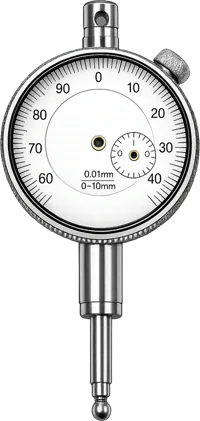
Gauge Service
North America’s Gauge Repair & Rebuilding Specialists — The Profilometer Choice
We repair all major gauges, profilometers and related precision measuring tools — electronic and mechanical, non brand-specific.
Every instrument is operated, progressively disassembled and diagnosed by hand before a single part is ordered — then cleaned, rebuilt with new components, reassembled and tested. You receive a written quotation before any repair begins.
Call us today to talk to a technician about your instrument.
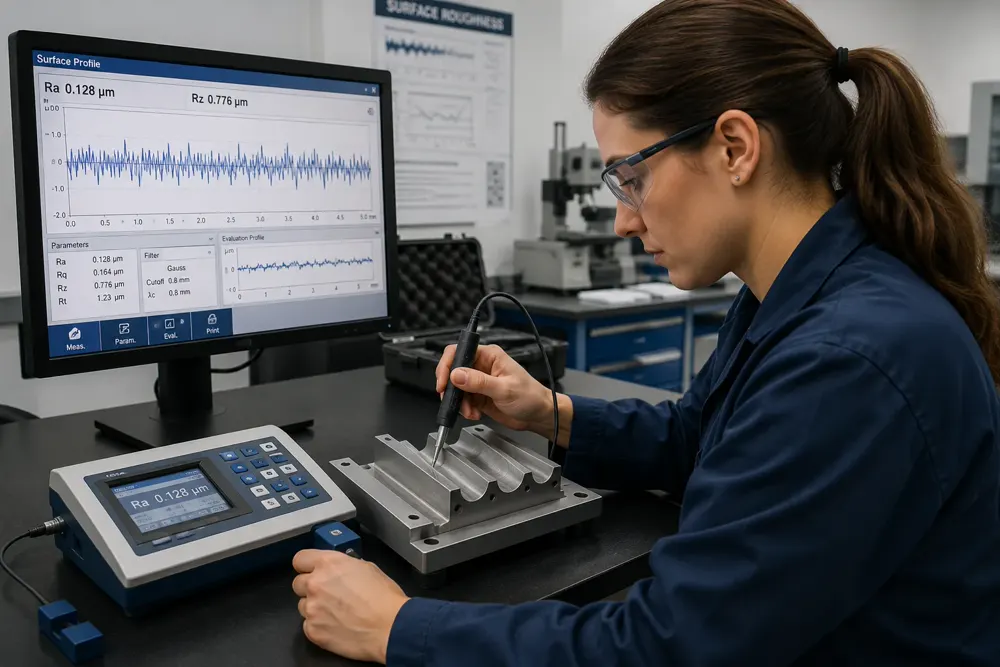
We specialize in the repair of all quality brands of precision measuring gauges — both electronic and mechanical. Non brand-specific repairs, quick turnaround, and competitive pricing for every gauge service need.
From the moment your tools arrive to the day they ship back, every step is done by a technician — and nothing is charged before you approve it.
After receiving your tools, our technician will operate each instrument and progressively disassemble the tool to determine the problem. We check all functions, including buttons, locks, movements, shafts, bushings, jewels, wires, gears, springs, crystals and bezels.
After a no-fee examination*, the tool is fully disassembled and cleaned. New components are then installed and the tool is reassembled and tested.
We will always issue a quotation prior to repair.
We will always contact you when a tool is not worth fixing.
We will always notify you when any repair requires more than a standard rebuild.
We can provide solutions for proper care and Preventative Maintenance Programs.
* Equipment under $1,000 is inspected free of charge.
Measured, repaired, and rebuilt to specification.












Cross-border shipping is routine for us — customs paperwork is available before you ship. Follow the checklist below and your instruments will move straight through.
UPS may update or relocate online documents. If a direct PDF link no longer opens, use the nearest UPS category page listed above to locate the current version.
Documentation requirements can vary according to the shipment contents, destination, origin, and regulatory status. The C$1,400 value is below the general C$2,000 export-declaration threshold cited in the linked FedEx and CBSA guidance, but controlled or regulated goods may require additional documentation regardless of value.
C$1,400 is not itself a FedEx or CBSA paperwork threshold. A shipment just over C$1,400 normally uses the same core documents as one below C$1,400. The thresholds that actually change the documentation are C$2,000 for certain exports from Canada and C$3,300 for Canada’s low-value commercial import treatment.
| Shipment value / situation | What changes | Key document implication |
|---|---|---|
| C$1,400.01 to C$1,999.99Non-restricted export from Canada | No new requirement is triggered solely by crossing C$1,400. | Shipping label and Commercial Invoice remain the core documents. For eligible non-U.S. exports below C$2,000, NDR2 may apply. |
| C$2,000 or moreExport from Canada to most non-U.S. destinations | An electronic export declaration is generally required unless an exemption applies. | Submit through CERS or an approved reporting method, then provide the proof-of-report number in the FedEx shipment details. |
| Any valueRestricted or controlled goods | Value exemptions do not remove permit or reporting obligations. | Export declaration, permit, licence or agency certificate may be required. |
| Greater than C$3,300Commercial goods imported into Canada | The shipment is outside the Courier Low Value Shipment threshold. | Formal release/accounting requirements apply, and a Canada Customs Invoice or equivalent commercial invoice data is required. |
Requirements depend on origin, destination, commodity, purpose, importer status and whether the goods are restricted. Confirm shipment-specific requirements in FedEx Global Trade Manager or with FedEx/CBSA before shipping.
The former US$800 duty-free de minimis treatment is currently suspended. Low-value merchandise entering the United States is still processed through an applicable informal or formal entry procedure and may be subject to duty, tax and fees. The main general value distinction for U.S. customs entry remains US$2,500, although regulated products can require formal treatment at lower values.
| Shipment situation | General treatment | Document implication |
|---|---|---|
| Documents with no commercial value | No merchandise customs invoice is generally required. | Create the UPS shipping label and accurately identify the contents as documents. |
| Any cross-border merchandise shipment | Customs must determine value, origin, classification and admissibility. | UPS label plus Commercial Invoice or Pro Forma Invoice. Additional forms depend on the goods and destination. |
| U.S. import valued at US$800 or less | Not automatically duty-free under the currently suspended de minimis treatment. | Commercial Invoice and applicable customs entry data are still required; duty, tax or fees may apply. |
| U.S. import below US$2,500 | Usually eligible for informal entry, unless the goods are restricted or subject to a lower formal-entry threshold. | Commercial Invoice remains central. UPS or the importer may need identity, tariff, origin and agency information. |
| U.S. import of US$2,500 or more | Formal entry is usually required. | Importer Tax ID, broker authorization/POA and other formal-entry information may be requested. |
| U.S. export over US$2,500 per Schedule B/HTS code | EEI is generally required unless a specific exemption applies. | File in AES/AESDirect or authorize UPS to file; provide the Internal Transaction Number or exemption citation. |
| U.S. export to CanadaSending a gauge to us | Generally exempt from EEI under FTR 30.36, with important exceptions. | Use the correct NOEEI exemption citation unless the shipment is licensed, controlled, transiting Canada or otherwise excepted. |
This is a practical link directory, not legal or customs-broker advice. Requirements can change by destination, product, origin, licensing status and government agency. Confirm the shipment in the UPS shipping system or with UPS/CBP before tendering it.
A credit application can be requested by email or by phone at 905-304-4730.