Frequently asked questions
North America’s Gauge Repair & Rebuilding Specialists — The Profilometer Choice
Everything below reflects how we actually work — the faults we see most often and what they mean, what we repair, how quotations and approvals run, and what you need to send with your instruments. If your question isn’t here, call 905-304-4730 and speak to a technician.
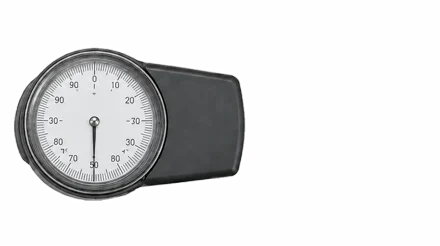
Almost always dried or contaminated lubricant in the gear train, or wear in the rack and pinion that drives the hand. It is one of the most common faults we see, and it is repairable on the great majority of indicators. The instrument is fully disassembled, cleaned in an ultrasonic bath, worn components replaced, then reassembled and tested.
Usually the same underlying causes — lubricant that has gone gummy with age, swarf that has worked its way into the case, or a worn jewel or bushing. Repair of instruments that are sticking or not repeating is routine work here, not a special case.
Repeatability problems usually come from wear rather than damage: a worn jewel, a loose bushing, or play in the gear train that lets the hand settle in a slightly different place each time. Jewel and ruby replacement and fine bushing setting are both standard operations in our lab.
Don’t assume it is scrap — but don’t keep using it either. A drop typically bends the spindle or contact point or unseats a jewel, and none of that is reliably visible from the outside. Send it in and we will assess it and issue a quotation before any work is done.
Yes. Broken or bent contact points and armatures are replaced as standard work, as are bent styli and spindles. If the thread or mount has been damaged as well, that is repairable in the same visit.
Yes, and it is one of the less expensive repairs. Broken, cracked or missing crystals and bezels are replaced routinely. It is worth doing promptly: a cracked crystal lets swarf and coolant mist reach the movement, which turns a small job into a full rebuild.
Most often wear in the linkage that carries the anvil movement through ninety degrees to the indicator, or a tired indicator sitting on top of a sound gauge. Both are repairable. We strip the gauge, check the linkage and contacts, replace what is worn and test it. More on bore gauge repair.
Play almost always means worn bushings or bearings in the head. Fine bushing and bearing setting and pressing is standard work here, so a gauge that feels sloppy is usually rebuildable rather than finished.
Typically the barrel has shifted out of alignment, or the anvil and spindle faces are worn or nicked from use. Micrometer barrel alignment and anvil replacement are both routine operations. See indicating micrometers.
Grit or hardened lubricant on the screw threads, and sometimes a burr raised by a knock. Manual and ultrasonic cleaning with the instrument fully disassembled clears it. Forcing a stiff thimble is what turns this into a spindle replacement, so stop using it.
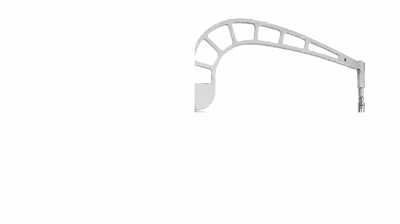
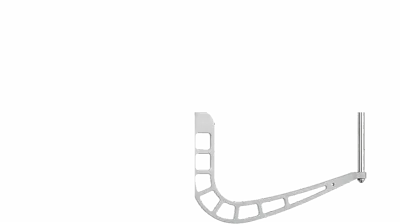
The most common cause is a worn or chipped stylus tip, which pushes readings off well before the wear is visible. Damage to the pickup or the drive unit will do the same. We service profilometers and surface roughness testers, including the pickup and drive.
Usually you cannot see it. The practical sign is a steady shift in readings on a part you have measured many times before, or results that no longer repeat across passes on the same surface. A worn tip does not fail outright — it quietly reads wrong, which is why it is worth catching early.
Yes — bent styli and spindle replacement is standard work. Send the whole instrument rather than the arm alone so the pickup can be checked at the same time; a bend hard enough to see is often hard enough to have loaded the pickup.
Rarely, if you send it promptly. Full disassembly with manual and ultrasonic cleaning recovers most contaminated instruments. What decides it is corrosion — and corrosion is a function of how long the moisture sits inside, which is the one part still in your hands.
Often a power or connection fault rather than a dead instrument. Battery-contact repair, broken ribbon-wire and flat flex-cable repair, electronic rubber switch and button repair and faulty LCD replacement are all in-house operations, so a dark display is usually worth sending in.
Age is rarely the obstacle. Our work is not brand-specific and we make custom mechanical parts in house, so an instrument whose maker no longer supplies spares can usually still be rebuilt. If you are unsure, call and describe it before you ship.
We repair profilometers as well as all major gauges and related measuring tools — electronic and mechanical alike. Work regularly through our lab includes:
See Repair & Rebuilding for the full range.
TESA Technology, Brown & Sharpe, Mahr Federal, Mitutoyo, Starrett, Interapid, Etalon Switzerland and Compac — as well as most other quality brands.
Our repairs are non brand-specific, so you don’t need to send an instrument back to its original manufacturer to have it properly rebuilt.
A technician operates each instrument and progressively disassembles it to determine the problem. We check all functions, including buttons, locks, movements, shafts, bushings, jewels, wires, gears, springs, crystals and bezels.
After the examination, the tool is fully disassembled and cleaned. New components are then installed, and the tool is reassembled and tested before it goes back to you.
A cross-section of what our lab performs on precision measuring instruments:
The complete list is on the Scope of Work page.
Yes. We can provide solutions for proper care and Preventative Maintenance Programs. Talk to us about the instruments in your shop and how often they’re used, and we’ll advise on a sensible service interval.
Always. We will always issue a quotation prior to repair.
We fax or email you an estimate, and no work is performed until we receive your written approval.
Equipment valued under $1,000 is inspected free of charge. The examination that determines what’s wrong with your tool carries no fee.
We’ll tell you. We will always contact you when a tool is not worth fixing.
We would rather lose the job than sell you a repair that doesn’t make economic sense.
As a standing rule, we never exceed half the cost of replacement without your approval.
You’ll hear from us before anything proceeds. We will always notify you when any repair requires more than a standard rebuild.
There are no surprises added to an approved quotation.
If a repair is declined, return freight is the customer’s responsibility. The examination itself remains free of charge on equipment under $1,000.
Average turnaround is approximately six business days. That figure covers a standard rebuild — a repair waiting on a specific part, or one that needs more than a standard rebuild, can run longer.
If you’re working to a deadline, tell us when you call and we’ll give you a realistic date for your particular instrument.
Do not default to prepaid — this will not be acceptable. The shipper pays all charges: duty, VAT, brokerage, tax and so on. Some or all of these fees may be written off or reclaimed at tax time.
A handwritten waybill or computer-generated label, as well as a Commercial Invoice (customs paperwork), is required for cross-border shipments.
We keep the current carrier forms and customs guidance together on one page — see Customs paperwork.
Yes. UPS customs papers are available, and FedEx customs papers are available for shipments under $1,400.00 CAD. For FedEx shipments over $1,400.00 CAD, contact us first on 905-304-4730.
The forms themselves are linked on our Customs paperwork section.
No. We do not accept COD shipments, and we do not cover incoming freight or duty charges on returned merchandise.
You can request a credit application by email or by phone — info@precisiontoolworks.com or 905-304-4730. Credit applications must be faxed prior to service, and setting up a new account is subject to approval.
If applicable, send your PST exemption prior to service so it can be applied to your invoice.
Yes — dimensional testing to national standards (NIST, NRC) is part of our scope of work, or ask when you send your instruments in.
Still not sure? Every instrument is different, and the answer for your particular tool, timeline or shipment may not be covered above. Call 905-304-4730 or email info@precisiontoolworks.com and a technician will talk it through with you before you ship anything.
We specialize in the repair of all quality brands of precision measuring gauges — both electronic and mechanical. Non brand-specific repairs, quick turnaround, and competitive pricing for every gauge service need.
Measured, repaired, and rebuilt to specification.